
Behind the Chair
Cowlicks, Crowns, and Growth Patterns: Planning the Cut Before You Start
Learn how to assess cowlicks, double crowns, fringe, and nape growth patterns before cutting, with practical advice for barbers and hairstylists.
October 17, 2026
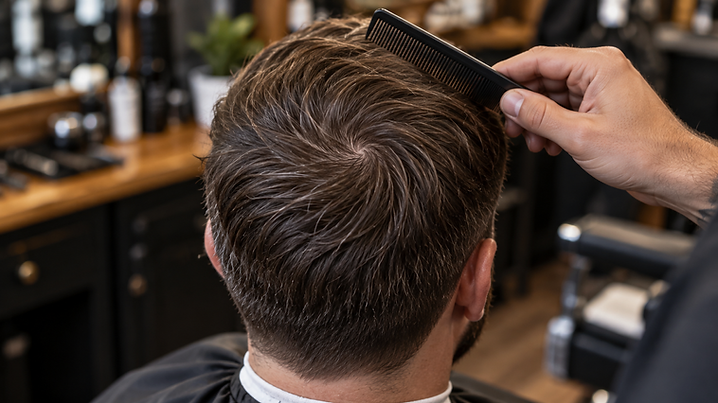
“This bit always sticks up.”
When a client points to the back of their head and says that, take a look before reaching for the spray bottle. They may be showing you the most important detail of the haircut.
A crown that lifts, a fringe that splits, or a neckline that grows sideways can change how a style behaves. The haircut may look balanced while you are holding the hair in position, then look different as soon as you let go.
Planning around hair growth patterns starts with watching what the hair does when you stop directing it.
Know what you are looking at
The crown is the area near the upper back of the head. A whorl is a circular growth pattern often found there. A double crown has two whorls. A cowlick is a localized pattern that makes a section lift, turn, or settle differently from the surrounding hair.
These terms help describe what you see, but the label alone does not tell you how to cut it.
BCcampus’s barbering education text explains that growth direction influences both the response to cutting and the techniques a professional chooses. It specifically calls attention to checking the hairline and nape before the service.
For the person in your chair, the useful question is simple: what happens in this area, and what would they like to be different?
Look before you wet or restyle the hair
Start by looking at how the client arrived.
Notice the parting, the crown, and any sections that separate or lift. Ask whether the hair has been blow-dried, straightened, brushed into place, or held with product. That tells you how much styling you are seeing.
Then ask:
“What does this area do after you wash your hair?”
“Has it behaved better at a length you’ve had before?”
“Do you want to style it each morning, or would you prefer to leave it alone?”
Treat a flattened or heavily styled section as incomplete information. Reassess during the service once you can see how it settles without being held in place.
Make a simple growth map
You do not need a complicated diagram. You need to recognize where the direction changes.
Work through the crown, front hairline, temples, behind the ears, and nape. Lift small sections with a comb, release them, and observe where they return. Avoid forcing the entire area in one direction while trying to assess it.
For your client notes, a brief description can help:
- Crown turns clockwise; client prefers coverage.
- Front lifts on the right; usually worn swept back.
- Nape changes direction behind the left ear.
Write what you observed and what the client wants. That is more useful at the next appointment than simply recording “difficult hair.”
Choose the crown length deliberately
There is no universal guard number or measurement that makes every crown behave.
Wahl’s cowlick guidance describes two broad options: a shorter cut that blends the area into the surrounding hair, or a longer approach supported by styling. Which one suits the client depends on the intended look and how the hair responds.
Sam Villa’s education also addresses assessing the shortest workable crown length. In separate guidance, educator Becka Bradshaw recommends retaining length for some strong growth patterns that become more pronounced when cut short.
Discuss those options before committing. “We can keep more length here and blend around it” is a useful recommendation when you can show the client what you mean.
If you are uncertain, preserve room to adjust. Remove length in stages and check the result between them. Do not assume a tuft needs another pass simply because it remains visible.
Give a double crown its own assessment
With two whorls, look at each center and the area where their directions meet.
Ask the client which section troubles them. They may be concerned about a ridge, a split, or how the back looks in photographs. Find that exact area together.
Before shortening it, separate the questions:
- Is the length uneven?
- Is the hair changing direction?
- Is this how the client normally wears it?
Those observations guide the next decision. If the issue is growth direction, repeatedly trying to make the area look uniform while combing it against its natural position may leave you with less length than you intended.
Explain what you can reasonably aim to improve, and avoid promising that the finished cut will make the pattern disappear.
Plan the fringe in the position it will be worn
A client asks for a straight fringe, but one side lifts away from the forehead. That detail deserves a conversation before you establish the length.
Ask them to show you how they normally wear the front. Is it brushed forward, swept aside, or lifted? Will they use a dryer?
Sam Villa’s growth-pattern education includes redirecting fringe and nape swirls with a dryer and comb. If styling is part of your recommendation, demonstrate it and let the client see the effort involved.
You might say:
“We can aim for this fringe, but this side will need some direction when you dry it. Would you like me to show you, or would you prefer a shape that leaves it more freedom?”
Check the fringe again after drying and releasing it. The client needs to understand the everyday result as well as the finish you create in the chair.

Check the neckline before drawing a new one
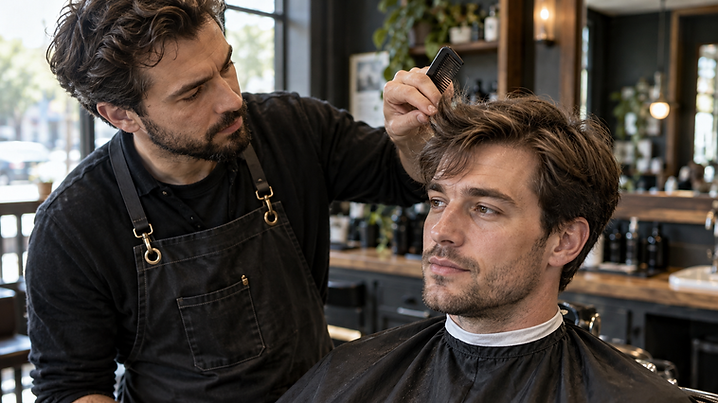
Hair at the nape may travel upward, sideways, or in more than one direction.
BCcampus recommends considering the natural hairline when shaping this area and discussing the client’s preferences. That assessment belongs before the outline is established.
Show the client the options in a mirror. Ask whether they prefer a natural finish or a more defined outline, and explain the upkeep involved.
A reference photograph can help, but inspect the actual neckline before deciding how closely to follow it. The position and direction of the client’s hair should inform the plan.
Finish with a routine the client can repeat
Before the appointment ends, show the client the area you discussed at the start.
Explain what you preserved, what you changed, and how to handle it at home. If you used a dryer, demonstrate the direction and tool placement clearly. If you used product, explain how much and where it went.
Then ask:
“Does this feel manageable for your usual routine?”
That answer matters. A finish requiring more work than the client will do needs an honest discussion.
At their next visit, ask how the crown or fringe behaved after the first wash. Keep that feedback with your cutting notes. Over time, you can build a much more useful record of which lengths, shapes, and routines suit that person.
A cowlick can be a reason to leave length, change direction, or choose a different silhouette. Read it early, explain your recommendation, and keep checking as the cut develops. The goal is a haircut the client understands and can comfortably wear between appointments.
Have a crown or fringe that never seems to cooperate? Explore BarberScope to discover barbers and hairstylists, review their work, and start a conversation about your next cut.